
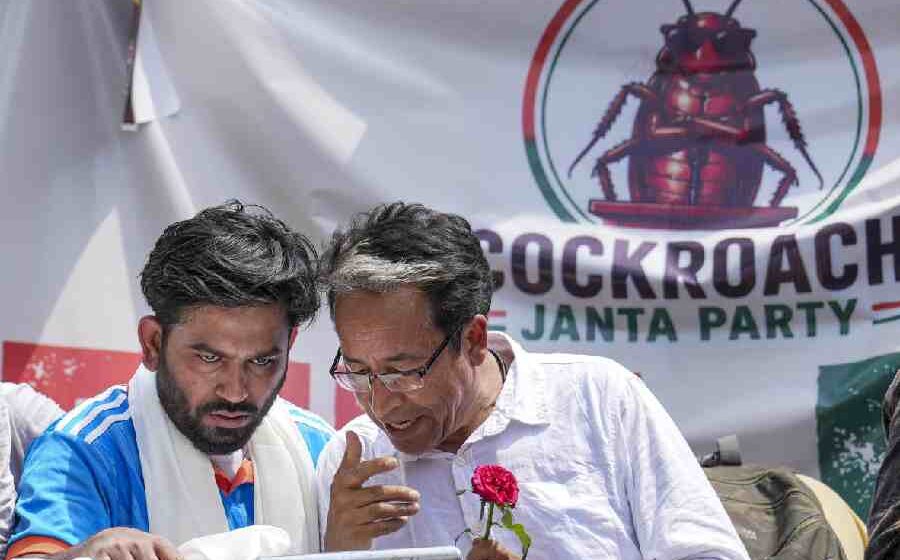

The rapidly growing Cockroach Janta Party (CJP), a youth-driven movement that gained popularity through social media, made its presence felt on the streets of New Delhi on June 6. Founder Abhijeet Dipke arrived in the national capital and called on supporters to maintain peace and discipline during the demonstration.
The protest, held at Jantar Mantar, focused on concerns surrounding education, employment opportunities, and accountability in public institutions. Participants demanded the resignation of Union Education Minister Dharmendra Pradhan, citing repeated controversies related to examination and recruitment processes.
Peaceful Demonstration Amid Tight Security
Authorities deployed additional security personnel across key locations in Delhi ahead of the gathering. Despite concerns over crowd management, the event remained largely peaceful. Organizers encouraged attendees to avoid confrontations, follow the law, and ensure that the protest reflected the movement’s commitment to non-violence.
Many participants carried books, flowers, and national flags as symbols of their demands for educational reform and democratic engagement. The movement’s leaders emphasized that their objective was to highlight issues affecting young Indians rather than create disruption.
From Online Satire to National Movement
What started as an online campaign has quickly evolved into a nationwide youth movement. CJP has attracted millions of followers on social media by combining satire, humor, and political commentary to address concerns such as unemployment, exam irregularities, and economic challenges faced by young people.
Abhijeet Dipke stated that the movement represents the frustrations of a generation seeking greater transparency and opportunities. He also reiterated his commitment to peaceful activism and democratic participation.
Growing Attention Across India
The Delhi protest marked an important milestone for the organization, testing whether its strong online presence could translate into real-world mobilization. Supporters viewed the event as a platform to amplify youth voices, while critics questioned whether the movement could sustain momentum beyond social media.
Regardless of differing opinions, the turnout demonstrated that issues related to jobs, education, and governance continue to resonate strongly with India’s younger population. As the movement expands, observers will be watching closely to see how it shapes future public discussions and political engagement.
Sources