
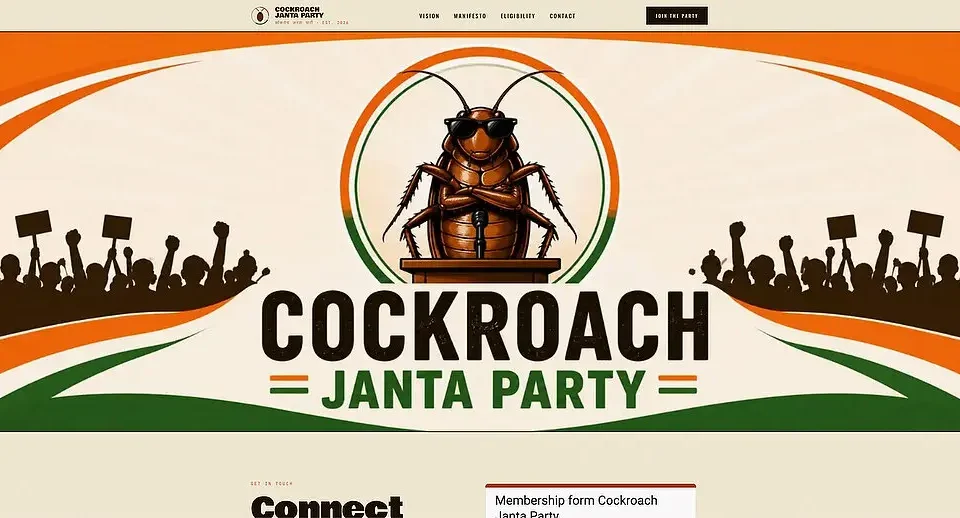

What began as an internet joke has rapidly evolved into one of India’s most talked-about youth movements. The Cockroach Janta Party (CJP), originally launched as a satirical response to controversial remarks about unemployed young people, has transformed into a digital platform expressing the frustrations and concerns of millions of Gen Z Indians.
The movement gained momentum after comments comparing unemployed youth to “cockroaches” triggered widespread backlash on social media. Instead of rejecting the label, many young people embraced it, turning the symbol into a form of protest. Within days, the Cockroach Janta Party attracted millions of followers across social platforms and became one of the fastest-growing online movements in the country.
Founded by Abhijeet Dipke, the initiative initially relied on memes, satire, and humorous videos. However, beneath the humor were serious concerns about unemployment, rising living costs, exam paper leaks, governance issues, and the lack of opportunities available to young Indians. For many supporters, the movement became a space to discuss problems they felt were not receiving enough attention in mainstream political conversations.
The cockroach itself became a powerful symbol. Supporters described it as representing survival, adaptability, and resilience—qualities they believe define a generation facing economic uncertainty and increasing social pressures. Online campaigns, digital posters, and viral videos helped spread the message far beyond traditional political circles.
Political observers note that the movement reflects a broader dissatisfaction among young voters. While many participants do not necessarily view CJP as a conventional political party, they see it as a way to express frustration with both the ruling establishment and opposition groups. The movement’s popularity suggests that younger generations are searching for new forms of political engagement that feel more relatable and authentic.
As the movement expanded, it also faced challenges. Social media restrictions, debates over online speech, and questions about whether the campaign can build an offline presence have become major topics of discussion. Analysts argue that maintaining long-term influence will require organization beyond social media and a clear vision for future action.
Despite uncertainty about its future, the Cockroach Janta Party has already demonstrated the power of digital communities in shaping public conversations. Whether it remains a satirical movement or develops into something larger, it has highlighted the concerns, aspirations, and political awareness of a generation that increasingly wants its voice to be heard.
Source: The New York Times